

ASIAN LACQUER
The Timeless Art of Asian Lacquer
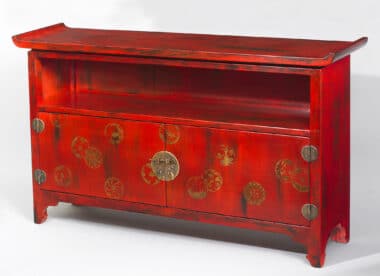
Asian lacquer has been a symbol of luxury, craftsmanship, and artistic expression for millennia. Craftsmen in China, Korea, and Japan used the resin of the lacquer tree, mixing it with pigments to create vibrant, durable surfaces. This technique allowed them to produce furniture, panels, and decorative objects with unparalleled sheen, color, and elegance.
Arrival in Europe
Around the early 16th century, Portuguese explorers discovered a sea route to the East. Consequently, lacquer objects arrived in Europe alongside other luxury goods such as silk and porcelain. Trade intensified in the 17th century when the Dutch and English East India Companies brought Asian exports to Amsterdam and London. By 1700, European palaces and country houses displayed East Asian lacquer pieces, elevating interiors with exotic sophistication.
Adaptation by French Artisans
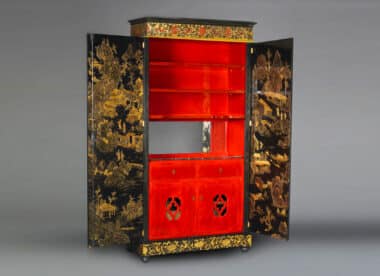
During the mid-18th century, French elites developed a strong taste for oriental decoration. Parisian craftsmen, or marchands-merciers, dismantled Japanese cabinets and Chinese Coromandel screens to reuse lacquer panels on new French furniture. They carefully cut, bent, and applied the panels, balancing them with japanned additions. Gilded brass mounts often concealed joins, providing a striking contrast with the lacquer. As a result, European interiors combined East Asian refinement with French luxury craftsmanship, although very few original Japanese cabinets survive intact today.
The Art Deco Revival
In the early 20th century, techniques for safely transporting and applying Asian lacquer in Europe were developed. Japanese masters arrived, sharing their knowledge. During the Art Deco period, designers embraced lacquer’s potential for modern, geometric, and luxurious designs. The Irish architect Eileen Gray studied under Japanese artisan Seizo Sugarawa in Paris, becoming one of the first Western designers to apply true East Asian lacquer to furniture. Similarly, French-Swiss designer Jean Dunand adopted traditional techniques and added his own contemporary patterns. Notably, Dunand incorporated eggshell inlays, combining lacquer with ivory, gold, and silver to produce unique, tactile surfaces that reflected both craftsmanship and modern aesthetics.
Vosges: Contemporary Mastery of Lacquer
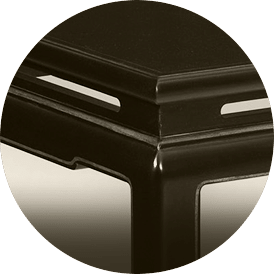
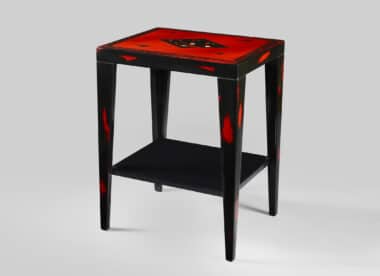
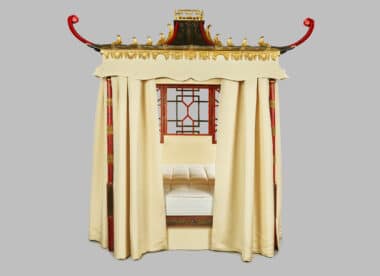
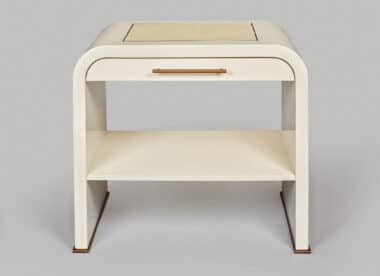
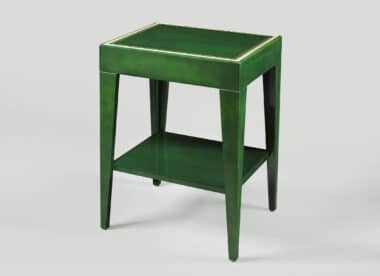
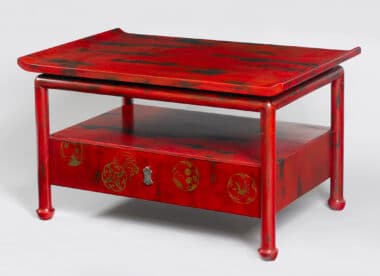
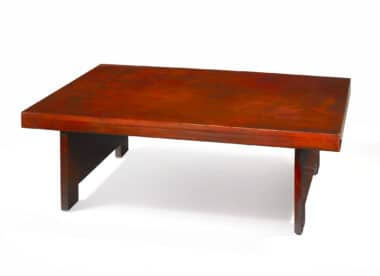
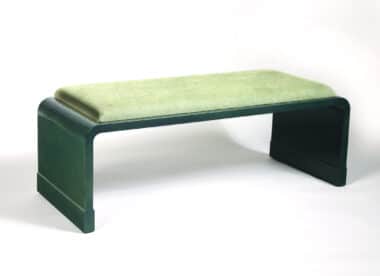
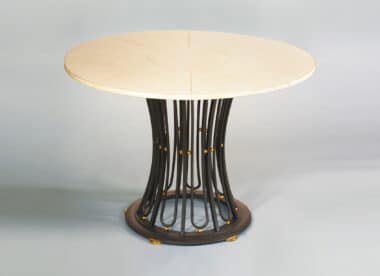
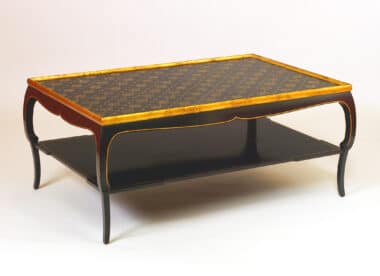
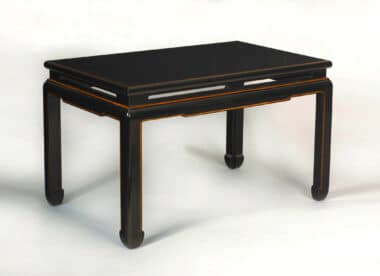
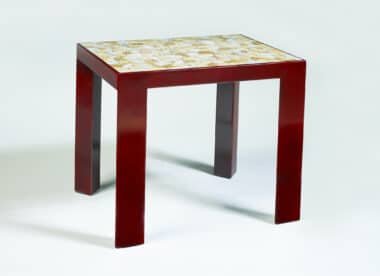
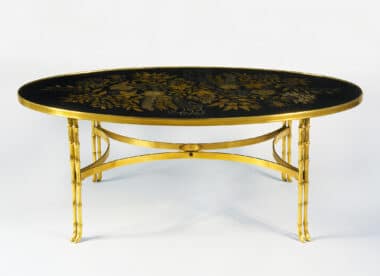
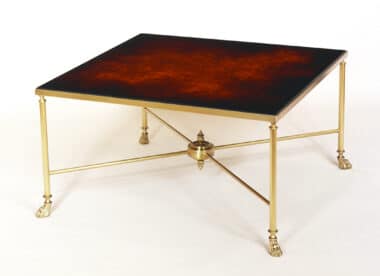
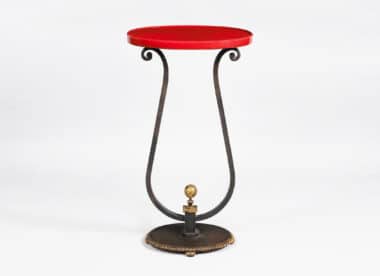
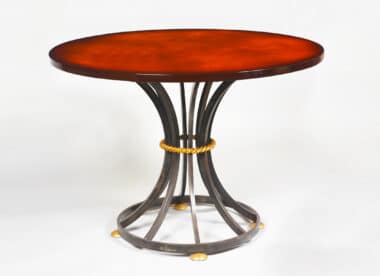
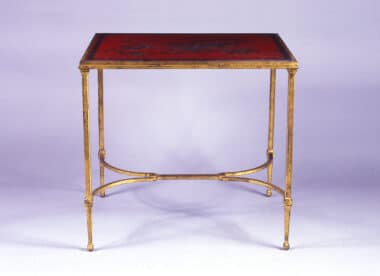
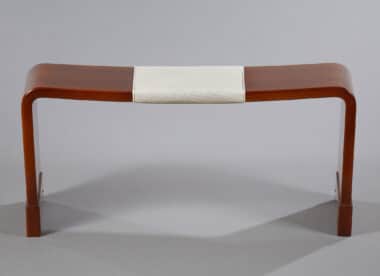
At Vosges, we continue this heritage by designing and crafting bespoke lacquered chairs, tables, screens, and panels. Inspired by historical techniques, our artisans also use eggshell inlays, echoing Jean Dunand’s approach while introducing modern innovation. Each piece is created with precision, luxury, and artistic refinement, ensuring a rich interplay of texture and light. By combining East Asian methods with contemporary design, Vosges produces furniture that embodies authentic craftsmanship, timeless elegance, and modern sophistication, transforming interiors into exclusive, luminous, and highly artistic spaces.
› See also our Pinterest board featuring lacquer furniture.